Summary
The combination of Everpure FlashArray and Nutanix Cloud Infrastructure delivers low-latency, scalable external storage over NVMe/TCP so SQL Server and Oracle database consolidations maintain predictable performance at scale.


When database consolidation projects fail, they fail at scale. Not immediately. The first few instances run fine. IT teams celebrate early wins. Then the fourth or fifth database goes live, latency climbs, and application owners start calling.
The problem is rarely compute. While Nutanix Cloud Platform simplifies workload virtualization, the constraint is often storage. Internal HCI storage works for general workloads, but databases under sustained transactional pressure expose a different reality: The shared storage pool becomes the ceiling, not the floor.
The Consolidation Density Problem
Consider what happens when you consolidate four SQL Server instances on a typical HCI platform. Each database handles 200 concurrent connections. That’s 800 simultaneous transactions competing for storage I/O. Published benchmarks for some storage configurations on similar platforms show write latencies climbing past 900 microseconds at this scale. Some require throttling concurrent users to as few as 20 per instance just to maintain acceptable latency.
SQL Server failover cluster instances face similar constraints to Oracle RAC: Both require shared storage that can sustain performance under load. For SQL Server availability groups, standard virtual disks work without shared storage requirements, but FCIs need storage that won’t become the bottleneck. For Oracle RAC, shared storage requirements for ASM disk groups demand multi-writer access that many platforms handle poorly or don’t handle at all. Snapshots and cloning, which DBAs rely on for test/dev and point-in-time recovery, are often blocked entirely by legacy shared-disk configurations.
External Storage without the Complexity
The Nutanix and Everpure integration, now generally available, addresses this directly. FlashArray™ connects to Nutanix Cloud Infrastructure over NVMe/TCP, providing external block storage without the management complexity that typically accompanies disaggregated architectures. Network bandwidth matters: 25GbE is the minimum for database workloads, with 100GbE recommended for high-throughput consolidation.

Figure 1: Overview of Nutanix AHV connecting to FlashArray
The integration maps each VM virtual disk to a dedicated FlashArray volume. Provisioning, snapshots, and monitoring flow through Nutanix Prism while the volumes themselves are formatted with the guest operating system’s filesystem. Platform teams get external storage performance without a second management console.
Both Nutanix vDisks (for standalone databases) and Volume Groups (for clustered configurations like RAC or SQL Server FCI) map to FlashArray volumes through the same Purity backend. For Oracle RAC, Volume Groups provide the shared storage presentation that ASM requires. For SQL Server FCI, the same shared storage capability applies.
What this enables:
- Independent storage scaling: Add storage capacity and throughput without adding compute nodes or rearchitecting your cluster.
- Network resilience: If the storage network becomes isolated on a host, the integration automatically reroutes VM I/O over the management network, keeping VMs online without manual intervention.
- Per-VM storage policies: QoS and data protection apply at the individual database level through Prism.
What We Tested
We validated SQL Server consolidation using HammerDB-Scale, an orchestration framework for running TPROC-C benchmarks across multiple database instances simultaneously. The test environment ran on seven Nutanix AHV nodes connected to a FlashArray//XL170 R5 over NVMe/TCP. Each SQL Server instance handled 200 concurrent virtual users, a workload intensity significantly higher than many published benchmarks for similar configurations.
SQL Server Consolidation Results
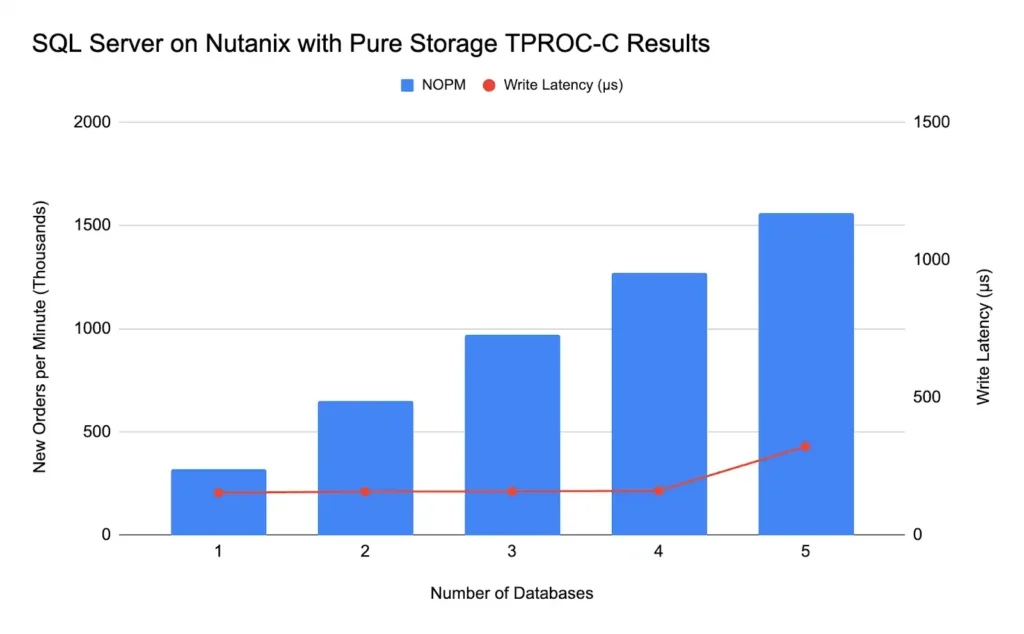
Figure 2: SQL Server on Nutanix TPROC-C Hammerdb-Scale Testing Results
The critical metric is latency under consolidation. FlashArray held sub-500 microsecond write latency with 1,000 concurrent users across five SQL Server instances. Published benchmarks for alternative storage configurations on similar platforms have reported latencies approaching a millisecond at lower concurrency levels. The difference matters: Predictable latency at scale means you can consolidate more databases without degrading the applications that depend on them.
We validated Oracle Database separately, achieving 1.15 million new orders per minute across four standalone instances at 161 microsecond write latency. The Oracle reference architecture also covers RAC deployments using Nutanix Volume Groups for shared storage.
Oracle Database Consolidation Results
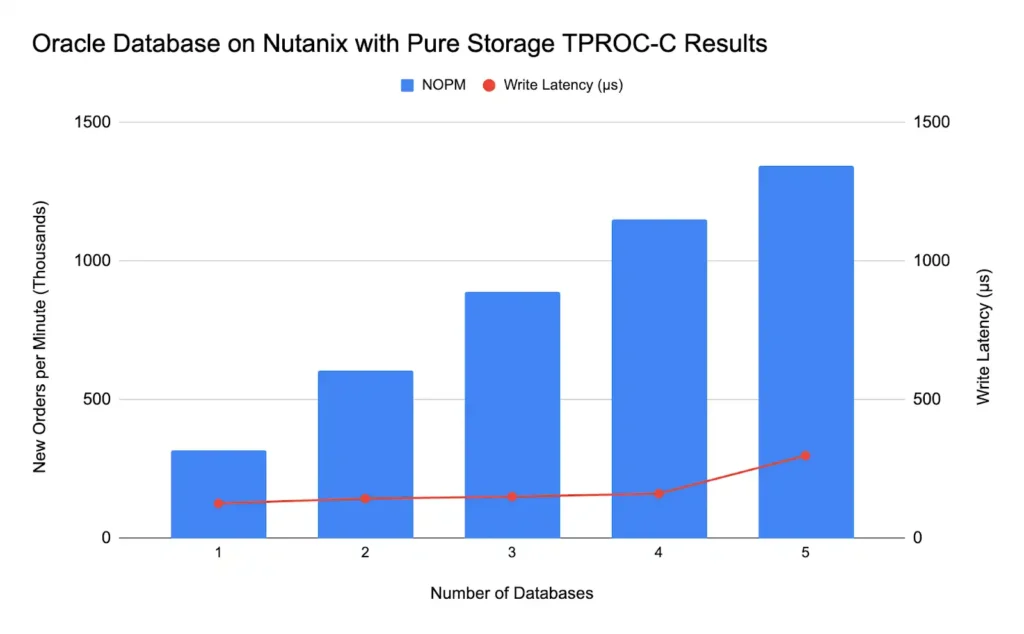
Figure 3: Results of TPROC-C testing with HammerDB-Scale.
When This Architecture Fits
This is not a wholesale replacement play. The architecture makes sense for specific scenarios:
- If your databases run fine on Nutanix native storage, stay there. When storage becomes the bottleneck and you see latency climbing under consolidation, FlashArray provides performance headroom without rearchitecting your compute layer.
- For Oracle RAC or SQL Server FCI on Nutanix, Volume Groups enable the shared storage these configurations require while maintaining the operational model Nutanix administrators already know.
- For organizations evaluating their virtualization strategy, database performance is often the hardest workload to migrate. Nutanix and FlashArray together deliver operational simplicity across compute and storage, with the performance headroom to consolidate aggressively.
Reference Architectures Available Now
Both reference architectures include validated deployment guidance, benchmark methodology, and configuration recommendations covering compute sizing, network configuration, storage layout, operating system tuning, and milestone-based deployment steps.
To learn more about the reference architectures, check out:
- SQL Server on Nutanix with Everpure® FlashArray
- Oracle Database on Nutanix with Everpure FlashArray
- FlashStack® with Nutanix Cisco Validated Design
For organizations running SQL Server or Oracle on Nutanix today, or planning to, the combination delivers storage performance headroom to consolidate aggressively without compromising the applications that depend on those databases. Learn more about the Everpure and Nutanix solution or contact your Everpure or Nutanix account team to discuss how this validated architecture supports your database consolidation requirements.

A Dynamic Duo
Learn about the Pure Storage and Nutanix partnership.
Come See Us at Nutanix .NEXT
Discover the most performant, effectively integrated storage solution for Nutanix.