Summary
The Everpure OpenSharing Connector lets Databricks query Iceberg and Delta tables on Everpure object storage without replication or data movement, giving enterprises governed access to on-premises data.


The Everpure Platform
Our intelligent, unified storage and data management platform eliminates silos and downtime, automates operations, and shrinks risk. Built to scale across all AI, hybrid cloud, and mission-critical workloads.
The Everpure OpenSharing Connector lets Databricks query Iceberg and Delta tables on Everpure object storage without moving the data. It enters private preview on June 9, 2026.
Databricks is a unified analytics platform where data engineering, data science, and machine learning converge. Everpure is an enterprise data platform built on all-flash storage, delivering block, file, and object under a single operational model. This connector bridges the two: On-prem data stays on Everpure, and Databricks users query it as if it were native to their environment.
Most organizations have data sets on-prem that their Databricks users cannot reach today. The alternatives have been to copy the data to cloud storage, build a sync pipeline, or accept that those data sets stay outside the analytics estate. Each option carries real cost: egress fees, pipeline engineering, a second copy to govern, or simply going without the data. The connector removes that tradeoff.
Data movement is the wrong default
For most of the last decade, enterprise data architecture has assumed one thing: Data moves toward compute. Storage was the asset to be managed. Compute was where value got made. Pipelines did the work of getting one to the other, and the modern data stack diagram has had the same arrow direction for a decade.
That assumption is breaking down, and not because of engineering preferences.
The value of data erodes every time it moves. Each pipeline stage between data and a decision is a place where that option is lost. Each copy carries its own cost. The longer it takes for data to reach the system that needs it, the less useful it becomes for whatever decision is waiting on it. And the value of the data depends, contextually, on the question being asked of it and the prior information the consumer already has.
That’s an economic constraint, not an engineering one. It changes how an architecture should be designed.
The Databricks Software-Defined Storage ecosystem
The architecture has to stop requiring data movement because the value of data erodes over time.
That is the logic behind the Software-Defined Storage ecosystem Databricks is announcing. Databricks is opening its compute layer to storage platforms outside of cloud object stores. The mechanism is OpenSharing, Databricks’ open protocol for securely exposing tabular data across platforms without copying data sets between environments. Unity Catalog is the governance layer that manages access, permissions, and audit across all shared data.
The compute queries the data through the catalog. The data stays where it is.
The assumption that all enterprise data would be consolidated into public cloud has not matched operational reality. Gartner expects 90% of organizations to adopt hybrid cloud through 2027. Half of all critical enterprise applications will sit outside centralized public cloud through 2027, and that share is growing as AI pushes training and inference closer to source data. Meanwhile, moving data is not getting cheaper. Google doubled its peering egress rates this year. The economics of copying data to the cloud are getting worse at the same time the volume of data that needs to stay put is getting larger.
For the Software-Defined Storage (SDS) model to work, the storage side cannot just serve bytes. It has to know what tables it holds, expose them at the table level, control which ones are shared and with whom, and manage credentials without interrupting existing consumers. A platform that thinks of itself as managing storage will not satisfy that. A platform that manages data as a first principle can.
What the connector does
The Everpure OpenSharing Connector lets Databricks query Iceberg and Delta tables on Everpure object storage without moving the data.
An engineer points the connector at a bucket on FlashArray™ Object or FlashBlade® Object. The connector discovers the Iceberg and Delta tables inside, and the engineer selects which ones to share. A sharing token is generated, imported into Databricks Unity Catalog, and from that point on, the shared data sets appear as governed catalog objects inside Unity Catalog and inherit Databricks-native access workflows for downstream analytics and AI workloads. SQL, Python, Spark, and model training jobs all work against them normally. No Everpure SDK. No custom query syntax. Value is realized the moment the token is imported.
Unlike traditional replication or synchronization architectures, the connector exposes existing tables directly to Databricks without creating a second governed copy. There is no migration, no pipeline to build, no ongoing sync to maintain.
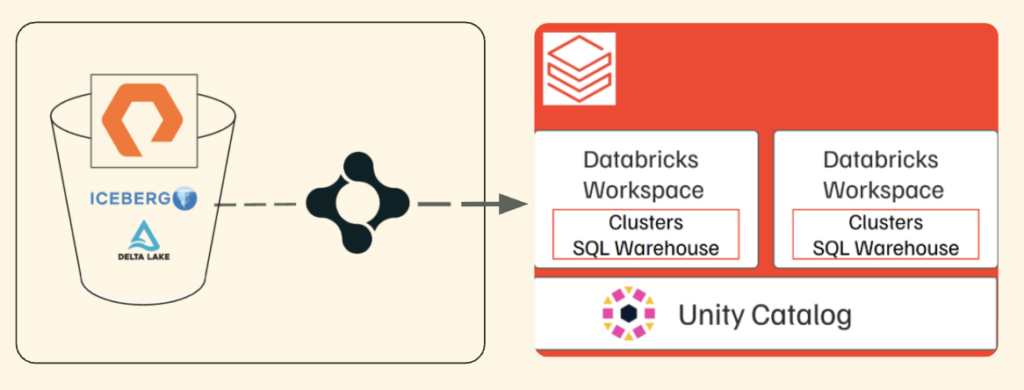
Figure 1: The Everpure OpenSharing Connector data sharing architecture.
The connector implements Delta Sharing, not a proprietary integration, so the same tables are accessible to any compute platform that speaks the protocol. Token rotation uses a stage-swap so consumers are not interrupted, and every change is written to an append-only audit log. The protocol is open. And because the data never moves, the cost of making a data set available to analytics is the cost of sharing it, not the cost of copying it.
“Everpure and Databricks enable organizations to access and analyze on-premises data directly from the cloud without the need for replication or duplication. Continuously moving data between environments is costly and unsustainable at scale. Customers are looking for a simpler approach that balances cost, compliance, and data sovereignty while reducing operational complexity.”
–Chadd Kenney, VP of Product Management, Everpure
Figure 2: The Everpure OpenSharing Connector dashboard.
Where this changes the calculus, by industry
Four industries where on-prem data and Databricks commonly coexist illustrate the connector’s impact:
- Automotive: Vehicle telemetry, CAN bus logs, and sensor data from test fleets and production vehicles accumulate on-prem at petabyte scale. Analytics teams running Databricks for predictive maintenance or fleet optimization have had no way to reach that archive without building a copy pipeline. The connector makes the telemetry archive queryable from Databricks directly, while the data stays on the factory floor.
- Healthcare: HIPAA and institutional policy keep medical imaging, electronic health records, and clinical trial data on-prem. Databricks is increasingly where population health analytics, precision medicine, and clinical trial optimization run. The connector bridges that gap without the data crossing a compliance boundary.
- Financial services: Trading records, risk models, and transaction histories sit on-prem for data residency, latency, and regulatory reasons (SEC Rule 17a-4, DORA). The connector lets Databricks run risk analytics and fraud detection against that data without replicating it to a cloud tier.
- Energy and industrial: Refineries, wind farms, and power grids generate continuous sensor telemetry at volumes and locations where copying to the cloud is not practical. The connector gives Databricks access for predictive maintenance and anomaly detection, without moving the data off-site.
Getting started
The Everpure Delta Sharing Connector enters private preview on June 9, 2026. To unlock your on-prem tabular data estate, request a preview briefing to see how in-place access can eliminate replication pipelines and cloud copy overhead. Reach out to your Everpure account team or contact Sales to get started.