

Summary
Data centers are classified using a data center tier framework based on their uptime, redundancy, and fault tolerance capabilities.


Data centers have become the cornerstone of global connectivity, powering cloud services, enterprise applications, and critical IT infrastructure. Because of that, it’s more important than ever for organizations to design and manage these facilities in ways that align with key priorities for performance, reliability, and cost.
Understanding each of the tiers is an essential prerequisite. Developed by the Uptime Institute, the tier classification system categorizes data centers based on their uptime, redundancy, and fault tolerance capabilities. This article provides a comprehensive guide to each of the tiers, their specifications, and their role in shaping resilient IT strategies.
What Are Data Center Tiers?
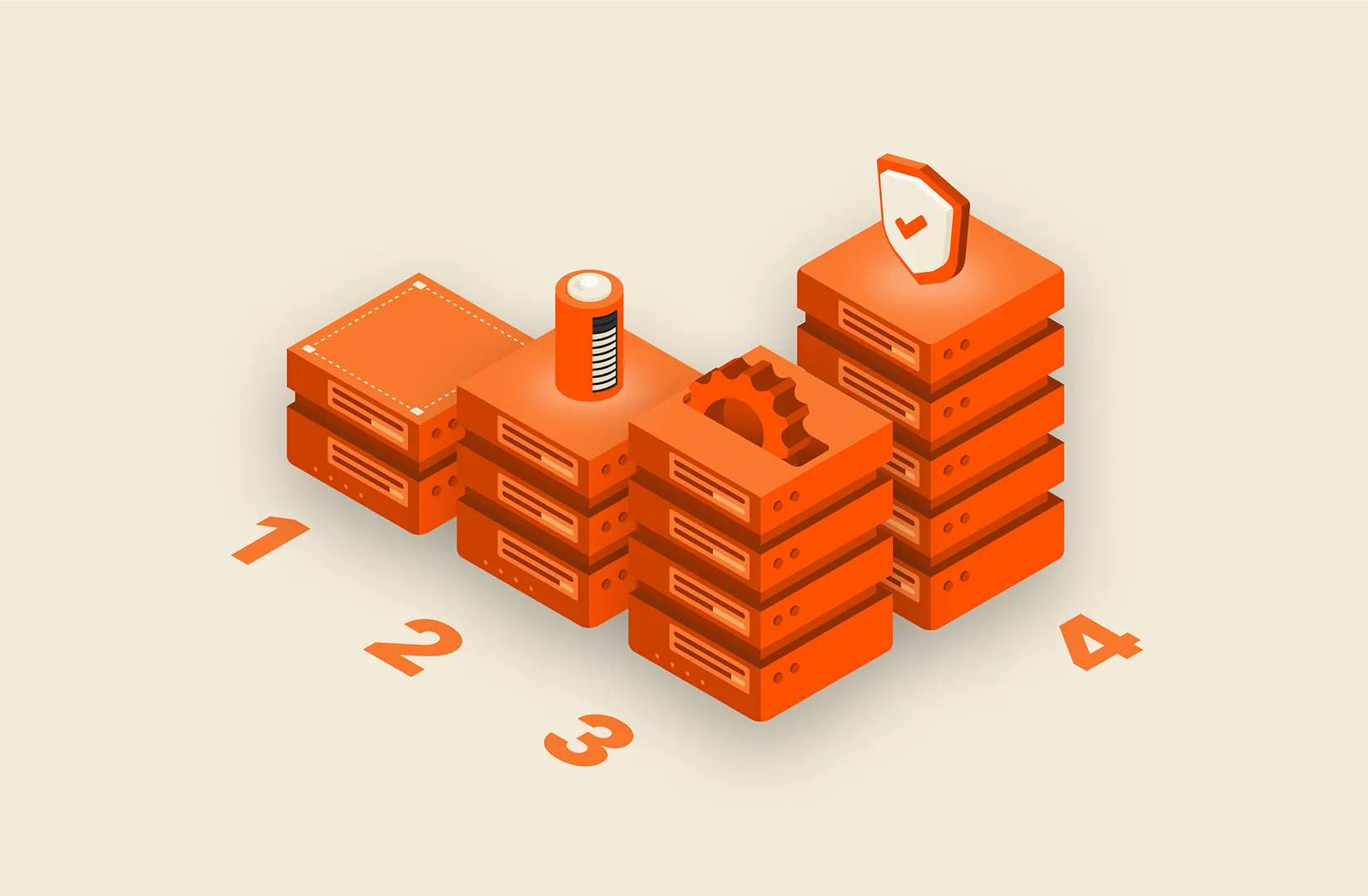
The concept of data center tiers offers a standardized framework for assessing a facility’s infrastructure and operational reliability. It classifies data centers into four levels, from Tier 1 to Tier 4, based on criteria such as power availability, cooling systems, redundancy, and maintenance capabilities. Built around a system of universal benchmarks, the framework ensures consistency in assessing data center capabilities and selecting facilities that meet their uptime and performance requirements.
The tier system evaluates factors such as the number of power and cooling paths, the ability to perform maintenance without downtime, and the capacity to withstand failures. Higher tiers offer greater reliability, but they cost more and come with increased complexity. Understanding the key distinctions and tradeoffs is critical for IT professionals and business leaders aiming to optimize their infrastructure investments.
Tier 1: Basic Capacity
A Tier 1 data center offers a baseline level of infrastructure, designed for organizations with less stringent uptime requirements. These facilities feature a single power and cooling path, with no redundant components. As a result, any maintenance or equipment failure typically results in downtime. Tier 1 data centers offer an uptime of 99.671%, equating to approximately 28.8 hours of annual downtime.
Typical use cases for Tier 1 facilities include small businesses, startups, and non-critical applications such as development and testing environments. A local retail business might use a Tier 1 data center, for example, to host its website or back office systems, where occasional downtime has a very limited impact. Tier 1 data centers are cost-effective, but they lack the very high reliability needed for mission-critical operations.
Tier 2: Redundant Capacity Components
Tier 2 data centers are a step up from Tier 1, incorporating redundant components such as backup power supplies and cooling systems. These features enhance reliability, delivering uptime of 99.741%, or about 22 hours of downtime per year. Similar to Tier 1 facilities, Tier 2 data centers still allow for planned downtime to perform maintenance and repairs.
Tier 2 data centers are well-suited for small to midsize businesses with moderate uptime needs, such as e-commerce platforms, content management systems, or internal enterprise applications. For example, an online retailer might choose a Tier 2 facility to balance affordability with reliability, ensuring reasonable uptime without the increased costs of a higher tier.
Tier 3: Concurrently Maintainable
A Tier 3 data center introduces the concept of concurrent maintainability, allowing maintenance or upgrades without disrupting operations. These facilities feature multiple power and cooling paths, with at least one active and others on standby, ensuring continuous operation, even during repairs. Tier 3 data center requirements include N+1 redundancy, meaning each system has one spare component to handle failures. This results in an uptime of 99.982%, or approximately 1.6 hours of downtime annually.
Tier 3 data center specifications make them ideal for industries requiring high availability, such as healthcare, finance, and large-scale e-commerce. For example, a hospital might choose a Tier 3 facility to host its electronic medical records, ensuring virtually uninterrupted access to patient data. The ability to perform maintenance without downtime provides operational flexibility, making Tier 3 a popular choice for organizations prioritizing reliability without the premium cost of Tier 4.
Tier 4: Fault Tolerant
Tier 4 data centers represent the gold standard, offering fault tolerance to withstand significant failures without impacting operations. These facilities feature fully redundant systems, often configured in 2N (dual systems) or 2N+1 (dual systems plus a spare) setups, with multiple independent power and cooling sources. Tier 4 achieves an uptime of 99.995%, equating to just 26 minutes of downtime per year.
The highly fault-tolerant design of Tier 4 data centers makes them ideal for global enterprises, cloud service providers, and mission-critical applications where even brief outages are unacceptable. For instance, a major financial institution or a hyperscale cloud provider might rely on Tier 4 facilities to ensure seamless service delivery. However, the advanced infrastructure and redundancy come with significantly higher costs, making Tier 4 data centers suitable primarily for organizations with stringent reliability and security requirements.
Is There a Tier 5 Data Center?
A frequently asked question is, “What is a Tier 5 data center?” Despite references in marketing materials or industry discussions, the Uptime Institute’s official tier system only includes Tiers 1 through 4. The term “Tier 5” is sometimes used informally to describe ultra-resilient facilities with advanced features like full automation, sustainability initiatives, or extreme fault tolerance. However, without a standardized definition, Tier 5 remains a speculative concept, and Tier 4 continues to represent the highest level of data center classification tiers.
Comparing Tier 1, Tier 2, Tier 3, Tier 4 Data Centers
To summarize the key differences among the various data center tiers:
- A Tier 1 offers basic infrastructure with no redundancy, suitable for non-critical applications.
- A Tier 2 adds redundant components, improving reliability but requiring downtime for maintenance.
- A Tier 3 provides concurrent maintainability, ensuring uptime during repairs, making it a robust choice for critical operations.
- A Tier 4 provides the gold standard in reliability and fault tolerance.
Understanding these distinctions can help you select the right tier based on your operational needs and budget constraints.
Importance of Choosing the Right Tier
Selecting the right tier is a strategic decision, impacting performance, scalability, and cost. As part of your evaluation, consider your organization’s uptime requirements, data access patterns, regulatory compliance, and growth plans. For example, a startup with limited resources might opt for a Tier 1 or Tier 2 facility to minimize costs, while a financial institution handling sensitive transactions would require a Tier 3 data center or higher to ensure uninterrupted service.
Data center tiers provide a structured framework for evaluating infrastructure based on reliability, redundancy, and cost. From the basic capabilities of Tier 1 to the fault-tolerant design of Tier 4, each tier serves distinct business needs, enabling organizations to align their IT infrastructure with operational goals. By understanding tiers of data centers and their implications, businesses can make informed decisions to enhance performance and scalability.
Solutions like Pure Storage FlashArray and FlashBlade further optimize performance, supporting tiered architectures tailored to specific workloads. Learn how to optimize your data center with Pure Storage solutions by contacting one of our experts today.
Talk with an Expert
Learn how Pure Storage can help you optimize your data center.


