Summary
Everpure has simplified the Purity release model for FlashArray and FlashBlade with continuous version numbering for clearer release maturity and enterprise-ready GA releases.


One of the founding principles of Everpure was to make enterprise storage as easy to use as a smartphone. Even as the pace of innovation has increased, and our products introduce more and more features, we’ve maintained that relentless focus on delivering capability without complexity.
In an effort to make it easier for customers to determine which Purity release is right for them, several years ago, we introduced the continuous release model for FlashArray™, which bifurcated releases into two major categories: Feature Releases (FR) and Long-Life Releases (LLR). Last year, we completed the implementation of this model for FlashBlade®, unifying the release model used for all of our arrays.
A refresher on release lines
Everpure has adopted an agile release model, delivering features continuously throughout the year, rather than bundling major changes and features into large monolithic releases. These new features and capabilities are introduced in Feature Releases, which in most cases are scheduled monthly for both FlashArray and FlashBlade.
Approximately every nine months, the active feature development phase of the release line ends—signaled by the switch from FR to LLR versions—and the maintenance phase begins. All the features that were introduced in FR versions are maintained with bug fixes and security updates in the LLR versions, typically for three additional years, until the release line reaches End of Life (EOL).
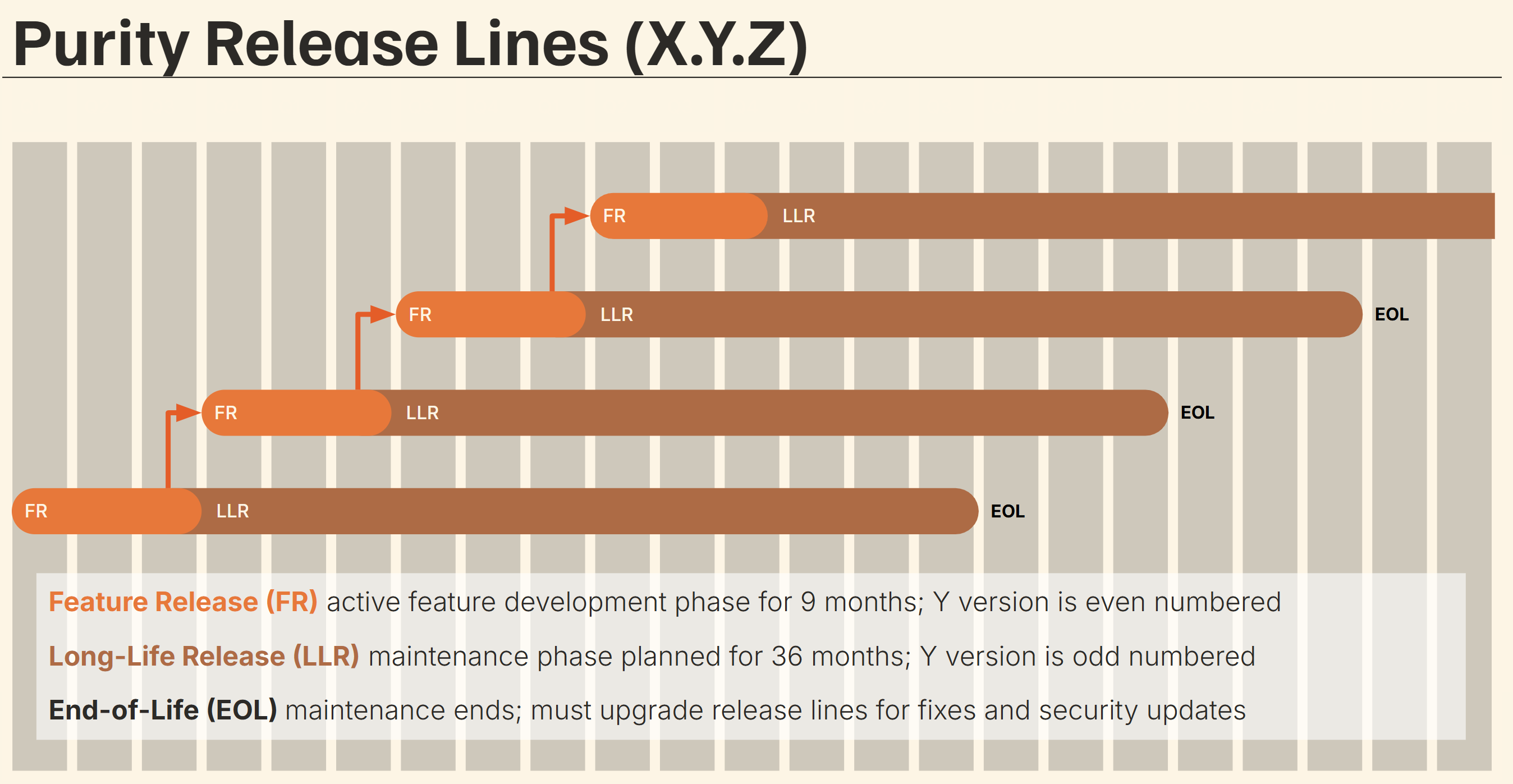
Figure 1: Purity release lifecycle from Feature Release to Long-Life Release to End of Life.
A clearer path to release maturity
Starting with the next maintenance cycle for both FlashArray and FlashBlade, Everpure is further simplifying the continuous release model with continuous version numbering. The X.Y.Z version number structure will not change, and as before, when an FR transitions into an LLR, the Y-version number will increment from an even number to an odd number. What is changing is that now the Z-version number will also increment rather than resetting to 0. This highlights that the LLR versions are a continuation of the same release line that was started with the FR versions.
Here’s an example: The Purity//FB 4.6/4.7 release line started in June 2025 with the 4.6.0 FR. Since then, it has seen nine additional FRs, bringing it to version 4.6.9. As we begin the next release line (4.8/4.9), the previous release line transitions to its maintenance phase with 4.7.10 LLR.
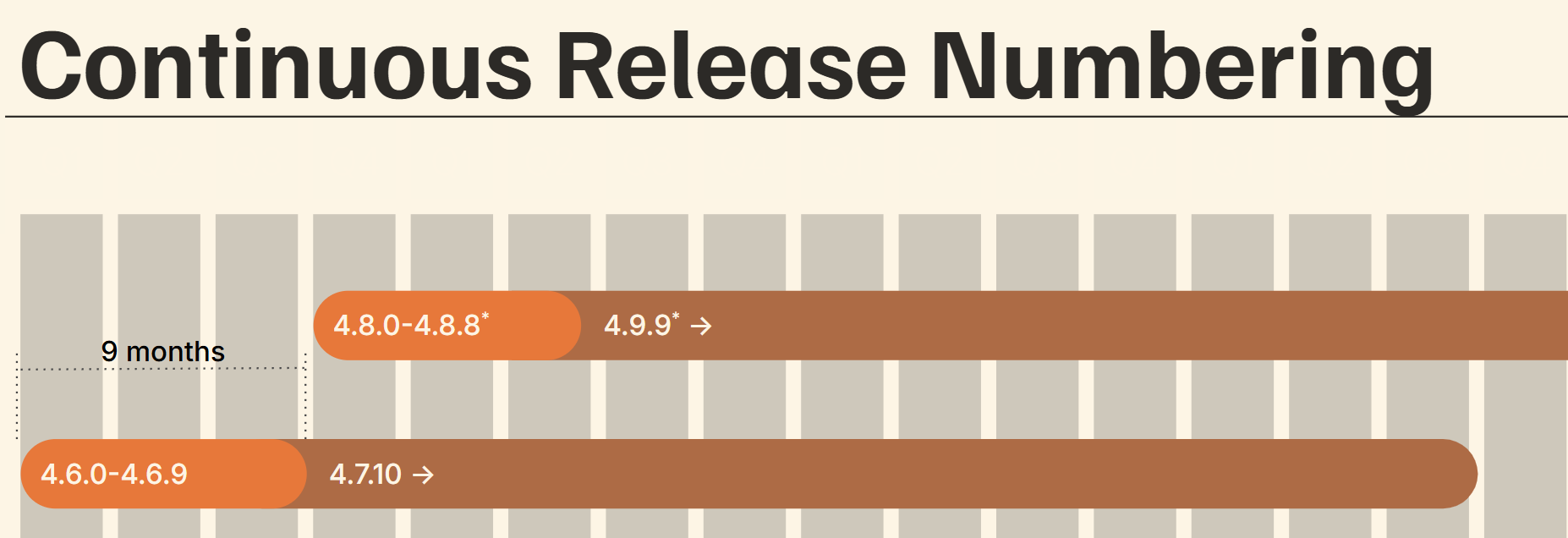
Figure 2: Example of continuous release numbering.
*Example version numbers for illustrative purposes only.
Why are we making this change?
This change serves to better illustrate that the first LLR version is truly just the next iteration of the same code line started in the preceding FR versions. This allows customers to judge a release’s maturity more easily and confidently and provides an unambiguous signal for when long-term maintenance of the complete feature set for the release line has begun.
Enterprise ready from day one
One additional note is that going forward, we’re retiring the “Enterprise Ready” (ER) designation for release lines. When the ER designation was introduced years ago, it was the signal that feature development had ended and the release had shifted into its maintenance lifecycle phase, making it broadly recommended for all enterprise customers. After the introduction of the continuous release model, the ER designation then became an indicator that a release line met specific maturity metrics relating to adoption, quality, and uptime.
All Everpure arrays are enterprise ready. Every public release of Purity given the General Availability (GA) designation is fully supported by Everpure for production deployments and has undergone rigorous testing. Now that the continuous release model is fully implemented for both FlashArray and FlashBlade, we’ve reached the point where the adoption and uptime targets are met as we transition from FR to LLR. This renders the ER designation redundant as an indicator of maturity and quality.
Choosing the right release for your business
When selecting a Purity release for your fleet, the primary motivator should be the desired feature set (with consideration for hardware compatibility). Customers should always run the most recent version of the desired release line and apply updates as often as their operational practices permit. Remember, the most up-to-date fixes and security patches are always found in the most recent version. Specific recommendations on which release line to use can be found when configuring a Software Lifecycle Policy in Pure1® Manage (login required). For more information about our release model and support policies, see the Everpure Product Lifecycle and Support Policies Overview page (login required).
Release adoption best practices
Customers have several options for adopting new releases, depending on their needs. Some organizations may choose to run their production fleets on a Long-Life Release to adopt groups of features at regular intervals, which can simplify their upgrade cycle. For these customers, running the latest LLR version is a reasonable strategy.
However, organizations that want to adopt features as soon as they’re available, or need a specific recently released feature, should consider running the current FR version. In addition, large or enterprise customers with dedicated test or lab environments are strongly encouraged to run the current FR on these systems. This gives them more time for testing and integrating the newest features as soon as they become available, so that when that release line enters its maintenance phase, they’re ready to adopt the LLR versions fleet-wide.
Release management, simplified
These updates—the new continuous version numbering and the retirement of the Enterprise Ready (ER) designation—streamline our continuous release model, underscoring our commitment to simplicity and quality. They provide clear, unambiguous signals of release maturity, ensuring you can deploy every General Availability (GA) release of Purity with complete confidence.
To maintain optimal security and stability, we encourage all customers to always run the most recent version available on their chosen release line. For assistance in selecting the optimal release for your environment, and to see how true non-disruptive upgrades make staying current a breeze, check out our Self-Service Upgrades Software Lifecycle Policies (login required) with Pure1 Manage.
Purity
One environment.
Every system.