


Summary
Everpure Cloud with Azure Red Hat OpenShift (ARO) brings together OpenShift Virtualization and enterprise-grade storage to help organizations migrate and manage VMs alongside containers on Azure while optimizing cloud storage costs.


This is Part 2 of the series, introducing Everpure Cloud and Azure Red Hat OpenShift and how they bring VMs and containers together.
Moving virtual machines to the cloud is often treated as the finish line. But for many organizations, it’s really the beginning of a bigger transformation: How do you evolve the way those workloads run without disrupting the applications that depend on them?
The answer is to move what you have today while creating a platform that supports what comes next. As we explored in Part 1 of this series, organizations can run VMs alongside containers and transition workloads incrementally, adopting cloud-native operations and practices without requiring an immediate application rewrite.
Today, we’re announcing Everpure Cloud with Microsoft Azure Red Hat OpenShift, bringing together Red Hat OpenShift Virtualization, Everpure Cloud for enterprise storage, and Portworx for Kubernetes-native data management and protection. Together, they help organizations move, operate, protect, and evolve VMs alongside containerized applications. This next step brings the “move and improve” approach to Azure.
The solution brings VMs and containers together on Azure Red Hat OpenShift, with integrated management, billing, and support for Azure commercial programs such as Microsoft Azure Consumption Commitment (MACC) and Azure Hybrid Benefit.
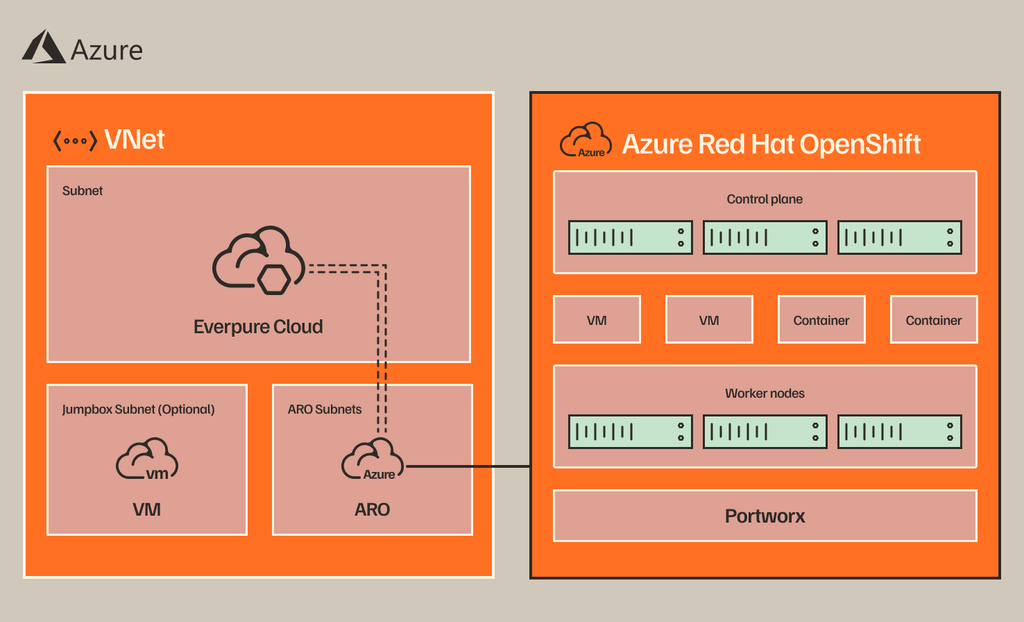
Figure 1: Unified platform for VMs and containers on Azure.
The destination matters as much as the migration
Imagine an organization that has spent years running a mix of traditional applications and newer cloud-native workloads. Some applications are ready to become containers. Others still depend on VMs and aren’t going anywhere soon.
Moving everything to the cloud doesn’t change that reality.
A traditional lift-and-shift approach may move those VMs successfully, but it can also recreate the same separation between VMs and modern applications. The result is a cloud environment that has moved locations without necessarily becoming simpler or more flexible.
Red Hat OpenShift Virtualization provides a different path. By running VMs alongside containers on the same platform, organizations can transition workloads incrementally rather than forcing every application through the same transformation.
A VM can keep running while teams adopt Kubernetes-based operations, automation, and cloud-native practices around it. New applications can be developed as containers without requiring existing applications to be rewritten first.
Migration itself can also be part of this transition. Red Hat’s migration toolkit for virtualization and Red Hat Ansible Automation Platform provide a path for moving existing VMs into Red Hat OpenShift Virtualization, allowing organizations to change the underlying platform without requiring an immediate application rewrite.
The result is a more practical journey: move what you have today while creating a platform that supports what comes next.
Are you paying for more cloud infrastructure than your workloads need?
Once those workloads are running in the cloud, another question emerges: Are you paying for cloud resources based on what your applications actually consume?
Cloud changes the economics of virtualization. On-premises environments often benefit from shared infrastructure, resource pooling, oversubscription, and storage efficiency. In the cloud, storage and compute are often provisioned as separate resources, which can make it harder to align infrastructure costs with how workloads actually use those resources. A VM might need more storage without needing more CPU, or additional compute without requiring additional storage capacity.
Everpure Cloud changes that model by decoupling storage from compute, so organizations can right-size compute based on workload requirements without needing storage-optimized VMs for their storage needs. This gives organizations the flexibility to scale persistent storage independently as requirements change, while reducing overprovisioning. Storage efficiency can further improve the economics. Thin provisioning, deduplication, and compression reduce the amount of physical storage required to support workloads, with the solution targeting up to a 40% reduction in cloud storage costs.
The benefit goes beyond storage efficiency. By separating storage from compute, organizations gain greater flexibility to optimize each independently instead of tying persistent storage capacity to a fixed compute configuration.
A Kubernetes-native foundation for VMs and containers
Bringing VMs and containers together is only useful if the underlying storage and data services work consistently across both.
That’s where Everpure Cloud and Portworx fit into the architecture.
Portworx provides Kubernetes-native data management, connecting workloads to persistent storage through storage classes and persistent volume claims (PVCs), while providing comprehensive data services, including disaster recovery and data protection, across VM and container workloads. Everpure Cloud provides the enterprise storage foundation, with storage efficiency and data services delivered independently from compute.
This gives infrastructure teams a consistent way to provision and manage persistent storage as workloads move between traditional virtual machines and containers.
Additionally, Azure Red Hat OpenShift enables you to run containers and virtual machines on a single platform, simplifying operations and reducing complexity.
It also means organizations don’t have to choose between supporting existing applications and modernization. They can run both while gradually changing how applications are developed, deployed, and managed.
The transition can happen incrementally. Teams can keep existing VMs running while building familiarity with Azure Red Hat OpenShift and gradually adopting cloud-native workflows.
Security and resilience across the platform
Moving workloads to a new platform also means thinking beyond where applications run to how they’re secured and protected.
Azure Red Hat OpenShift provides enterprise security and compliance features, including built-in auditing, CVE scanning, and confidential containers, along with built-in compliance for HIPAA, FedRAMP, DoD IL4, and more. Everpure Cloud provides data protection through features such as immutable snapshots, while Portworx provides data management and protection across VM and container workloads.
Together, these features help organizations protect applications and data while meeting the security, resilience, and compliance requirements of enterprise environments.
What happens when something goes wrong?
Once workloads are running in a new environment, the next question is what happens when something goes wrong.
For customers running critical VMs and containers on-premises, traditional disaster recovery can mean maintaining a fully provisioned secondary environment and coordinating separate processes across storage, virtualization, and applications.
A cloud-based recovery model offers another option.
With Everpure Cloud, organizations can use Azure Red Hat OpenShift as a recovery environment for on-premises workloads. FlashArray-backed Red Hat OpenShift workloads can be protected and recovered into Red Hat OpenShift Virtualization on the same platform, with Everpure Cloud providing the persistent storage target and Portworx coordinating recovery across VM and container workloads. In addition, Portworx extends this disaster recovery and data protection to non-FlashArray workloads, enabling customers to leverage the solution for any workloads running on Azure Red Hat OpenShift.
This allows customers to use Azure compute when recovery is needed rather than maintaining a fully provisioned secondary infrastructure stack at all times. Everpure Cloud provides the persistent storage foundation in the cloud, separating storage needs from recovery compute consumption.
The Portworx Dynamic Plugin for the Red Hat OpenShift web console simplifies the experience by bringing storage and disaster recovery dashboards and workflows directly into the Red Hat OpenShift console. It validates prerequisites, guides storage configuration, helps create DR policies, performs readiness checks, and provides recovery monitoring.
For customers, disaster recovery becomes part of the same platform strategy rather than another infrastructure environment to manage separately.
Beyond ‘move and improve’
This is ultimately about more than moving a VM from a data center into Azure.
It’s about what happens after the move.
Organizations can bring existing VMs onto the same platform as containers and transition at their own pace. They can optimize storage and compute independently, use Kubernetes-native data management across mixed workloads, and extend the Red Hat OpenShift operating model into Azure through Azure Red Hat OpenShift.
For organizations evaluating alternatives to traditional virtualization platforms, this creates a path forward without requiring an all-or-nothing transformation.
The goal isn’t simply to move workloads to a new location. It’s to give organizations the storage flexibility, operational consistency, and data protection they need to keep evolving those workloads after they arrive.
Move the workloads. Improve the platform. Optimize the economics. Protect what matters. And keep evolving.
Get started
If you’re evaluating how to modernize VMs, adopt OpenShift Virtualization, or build a more flexible hybrid-cloud strategy, Everpure Cloud with Azure Red Hat OpenShift provides a path forward.
The service is generally available now in supported Azure regions. New customers can start with a 30-day free trial of Everpure Cloud directly from the Marketplace listing. Pay-as-you-go and committed one-year and three-year subscription plans are available.
To learn more or get started:
- Check out the release notes for detailed guidance:
- Start your free trial.
- Learn more about the collaboration in Red Hat’s announcement blog
Missed the first blog in this series? Read “Beyond ‘Lift and Shift’: Why KubeVirt Makes ‘Move and Improve’ Actually Possible.”
Note: Everpure Cloud was formerly called Pure Storage Cloud. We’re currently updating our portals, release notes, and related materials to reflect the new name. Updates will be rolled out soon.
Missed Part 1?
Read “Beyond ‘Lift and Shift’: Why KubeVirt Makes ‘Move and Improve’ Actually Possible” to see how organizations can begin modernizing VMs without an immediate application rewrite.