
Summary
Enterprise data reduction for AI and modern workloads requires a predictable, high-performance approach to storage efficiency that lowers TCO as data growth becomes more complex and less predictable.


Our previous DeepReduce™ announcement blog framed similarity-based reduction as the next chapter in a long, deliberate evolution of Purity efficiency—“a long game, built into the platform,” not a one-time feature. This blog post is a spinoff looking at the industry landscape, diving deeper into the challenges and why a new approach toward storage efficiency is the need of the hour.
This post is the first in a new series highlighting the necessity for a rethink of storage efficiency posture in the age of modern data.
Let’s try to understand the evolution of modern data and its intricacies.
Data growth is no longer linear
AI pipelines, analytics platforms, and long-term retention mandates are driving exponential growth of unstructured data across enterprise environments. Data growth is no longer steady or predictable, consisting of large sequential files. It’s bursty, multimodal, and autonomous. In this new reality, data reduction isn’t optional—it’s foundational to cost control and sustainability.

Figure 1: Enterprise data growth is shifting from linear to exponential as AI, analytics, and long-term retention drive more complex unstructured data demands.
But here’s the problem: As systems scale, many data reduction technologies don’t behave the way customers expect. Data reduction ratios fluctuate. Performance overhead creeps in. Predictability disappears.
The industry challenge: Data growth meets economic reality
The concept of data reduction is not new. For decades, data reduction efficiency has been foundational to storage economics. The promise is simple:
Require less physical storage. Lower $/GB. Improve TCO.
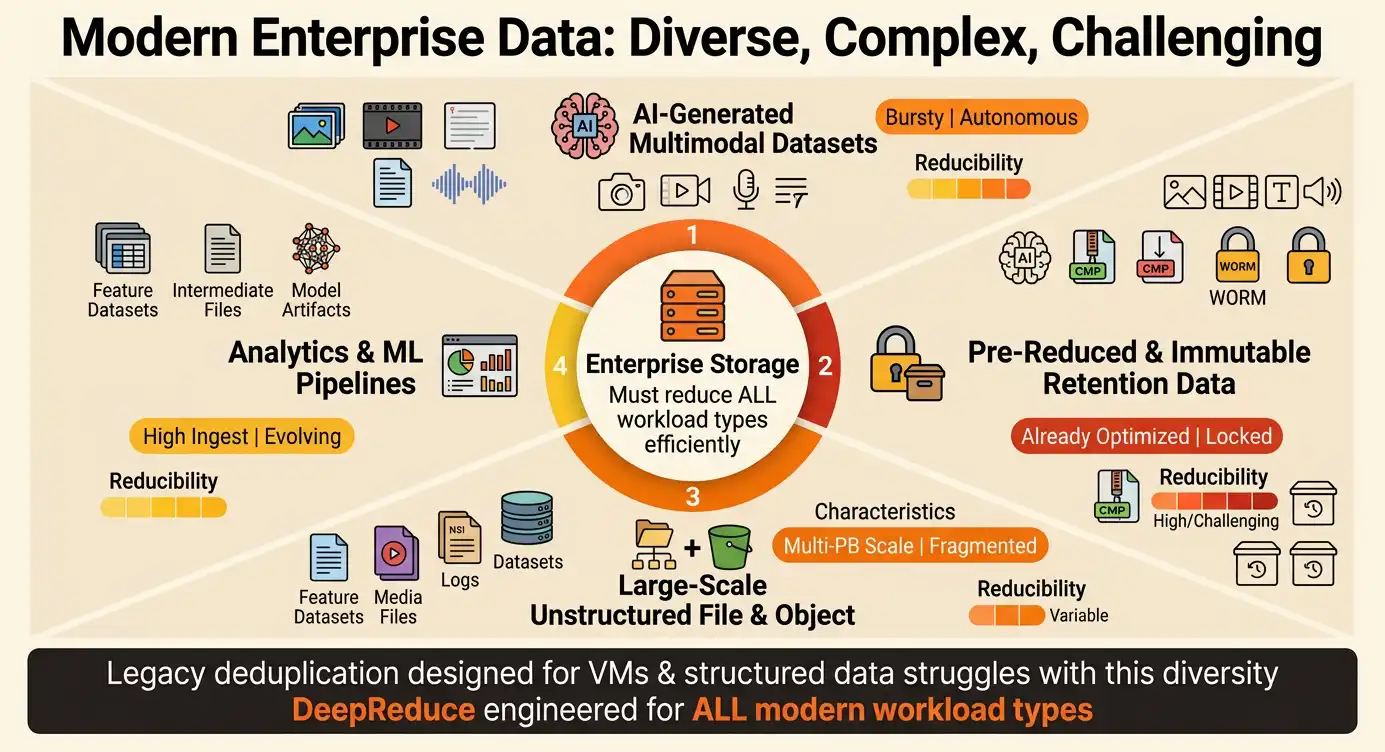
Figure 2: Modern enterprise data is increasingly diverse and complex, challenging legacy data reduction methods across AI, analytics, and unstructured workloads.
But modern enterprise workloads have changed the nature of data atomically with:
- AI-generated multimodal data sets
- Pre-reduced and immutable retention data
- Large-scale unstructured file and object workloads
These data sets are larger, more diverse, and often already optimized before they land on storage. This forces organizations to depend even more heavily on storage-level data reduction to control total cost of ownership (TCO). And this is where the uncomfortable truth emerges:
- Reduction ratios often decline as systems fill
- Efficiency varies across workload types
- Performance penalties surface under heavy load
- Lab numbers don’t always reflect production reality
Now that we understand the core reality of data change with evolving workloads, in our next blog, we’ll discuss how conventional data reduction approaches fall short in today’s AI era.
Don’t Let Unpredictable Reduction Ratios Erode your TCO
Discover how Everpure DeepReduce is redefining the standard for enterprise data reduction — built for the AI era, proven at scale.