Summary
Expanded SAP HANA certification across FlashArray//XL, FlashArray//X, and FlashArray//C enables enterprises to modernize and consolidate complex on-premises SAP landscapes with optimized performance, simplified management, and long-term scalability.


The 2027 deadline for SAP S/4HANA migration isn’t just a software upgrade. For enterprises running large, mission-critical SAP landscapes on premises, it’s a forcing function to rethink everything about how these environments are built, scaled, and operated.
And while much of the conversation focuses on application transformation, there’s a less glamorous but equally critical question: What infrastructure will these modernized landscapes run on?
For organizations committed to on-premises deployment, whether for regulatory requirements, performance demands, or operational control, the answer matters. A lot.
The Complexity of Large SAP Landscapes
Large SAP environments aren’t a single database. They’re complex ecosystems with both horizontal and vertical dimensions.
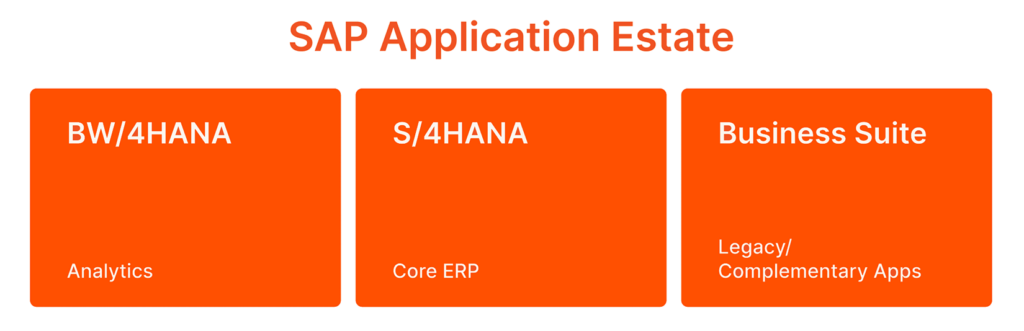
Horizontally, you have different workload types: S/4HANA for core ERP transactions, BW/4HANA for analytics, maybe legacy systems still in operation, and various supporting applications. Some of these run as massive scale-up instances pushing the physical memory limits of the largest servers available (think multi-terabyte configurations on other platforms. Others are more modest but still critical to operations.
Vertically, each workload typically exists across multiple environment tiers: production, QA, development, sandbox, and disaster recovery. These are often siloed, with separate infrastructure, separate management, and separate teams responsible for each tier.
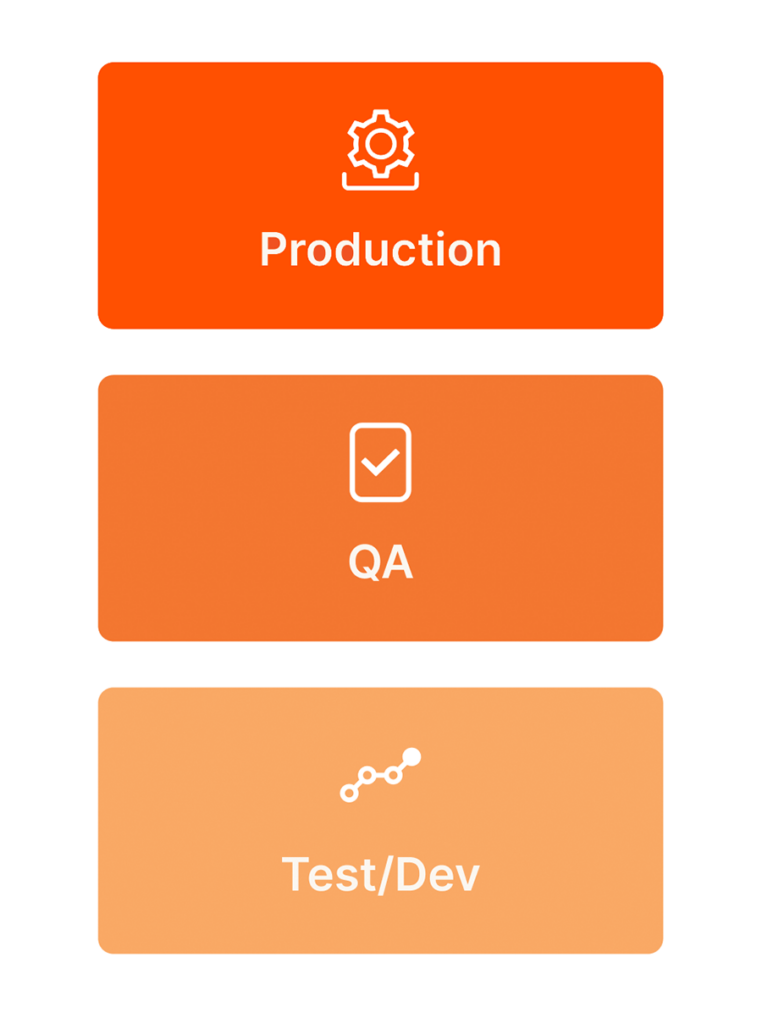
Add it up, and a “large SAP landscape” might include 30 to 50 HANA nodes spread across this matrix of workloads and environments. That’s not hundreds of instances, but it’s substantial. And historically, it meant substantial infrastructure sprawl.
Different storage arrays for different environment tiers. Block storage here, file storage there. Different vendors, different management tools, different support contracts. Each new workload or environment meant more complexity, more rack space, more power consumption, and more operational overhead.
To bring structure and predictability back to these sprawling deployments, enterprises are turning to trusted, validated infrastructure partners. The certification of Pure Storage within SAP’s Tailored Data Center Integration (TDI) framework is one such validation, ensuring that organizations can modernize SAP landscapes without compromising performance or manageability.
One Storage Family, Every SAP Workload
Pure Storage has significantly expanded SAP HANA certification across the entire FlashArray™ portfolio. The FlashArray//XL™, FlashArray//X™, and FlashArray//C™ families are now certified for both block and file protocols, with substantial increases in supported node density.
To put this in perspective: FlashArray//X70 R4 originally supported 22 SAP HANA nodes over block in 2017. The recently launched FlashArray//X70 R5 now supports 44 nodes for block and 36 for file. That’s more than double the consolidation capability on the same hardware footprint, with the addition of NFS support that didn’t exist before. With the R5 release, FlashArray//XL130 supports 53% higher SAP HANA node density, while FlashArray//XL170 sees an 81% boost compared to the previous generation.
The numbers across the portfolio:
FlashArray//C:
- //C50 R5: 14 nodes (block), 14 nodes (file)
- //C70 R5: 18 nodes (block), 18 nodes (file)
- //C90 R5: 24 nodes (block), 24 nodes (file)
FlashArray//X:
- //X20 R5: 24 nodes (block), 20 nodes (file)
- //X50 R5: 38 nodes (block), 30 nodes (file)
- //X70 R5: 44 nodes (block), 36 nodes (file)
- //X90 R5: 54 nodes (block), 50 nodes (file)
FlashArray//XL:
- //XL130 R5: 72 nodes (block), 64 nodes (file)
- //XL170 R5: 100 nodes (block), 76 nodes (file)
Matching Storage to Workload Requirements
Full SAP HANA certification across the FlashArray portfolio means you can optimize infrastructure based on actual workload characteristics and business requirements, not artificial platform limitations.
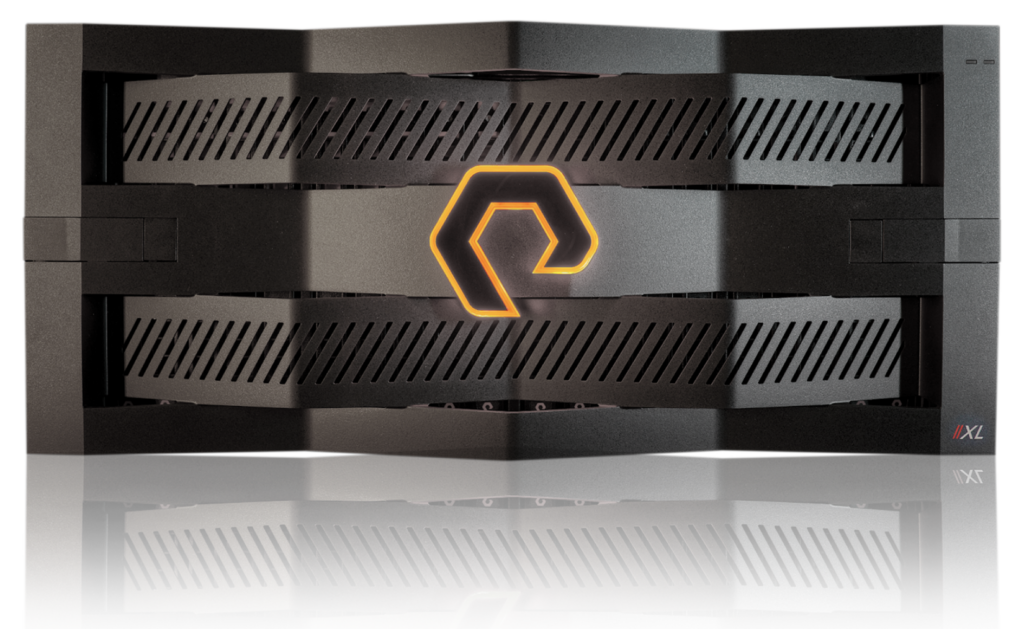
FlashArray//XL: Extreme Scale and Performance for Mission-critical Workloads
When your production S/4HANA instance is pushing the memory limits of the largest scale-up servers available, your storage can’t be the bottleneck. The FlashArray//XL series handles the absolute largest instances, the highest transaction volumes, and the most demanding performance requirements. It’s also the choice for consolidating multiple production workloads onto a single platform when performance headroom is strategic, not just adequate.
FlashArray//X: Performance You Can Count On
The FlashArray//X series is the backbone of most SAP production infrastructure. It delivers consistent, predictable sub-millisecond performance whether it’s Tuesday morning or end-of-quarter close. All-NVMe architecture eliminates performance variability across diverse workloads (S/4HANA, BW/4HANA, mixed environments). Your SAP Basis team doesn’t get 3am calls about storage bottlenecks. This is the platform SAP teams choose when performance needs to be both fast and reliable, every single time.
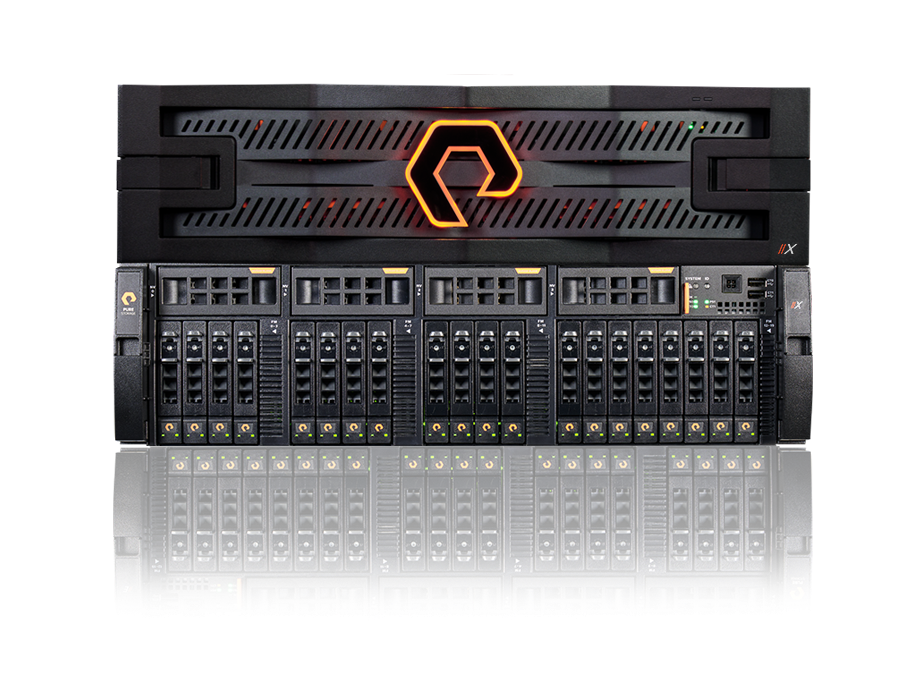
FlashArray//C: Production-certified Performance at an Optimized Price Point
The FlashArray//C series delivers certified SAP HANA support for production workloads where capacity and cost-effectiveness matter. Smaller production S/4HANA instances, budget-conscious deployments, and development or QA environments that need production-grade certification all find a home here. Just because it’s cost-optimized doesn’t mean it’s not production-ready.

What This Actually Means for SAP Operations
Consolidate across the landscape. Higher node density and dual-protocol support mean you can run more of your SAP estate on fewer storage platforms. That 30-50 node landscape that used to require 8-10 different arrays? Now it’s 2-3. Fewer platforms mean fewer firmware updates, fewer support contracts, less rack space, lower power consumption, and dramatically simpler disaster recovery. The economic benefits are straightforward: lower capital costs, reduced operational overhead, and simplified management at scale.
Protocol flexibility without compromise. Block or file for data and log volumes, your choice. Both protocols fully certified, both production-ready, both on the same platform. Use what makes sense for your environment without compromising on performance or supportability. No more “storage A for this workload, storage B for that one.”
Right-size infrastructure to workload needs. Production-certified options across the performance and cost spectrum mean you can optimize each environment tier appropriately. Dev/test on FlashArray//C, standard production on FlashArray//X, your largest instances on FlashArray//XL. All from the same FlashArray family with unified management.
The last storage platform you’ll buy. SAP landscapes don’t shrink, and traditional storage refresh cycles don’t align with SAP transformation timelines. Pure Storage Evergreen architecture eliminates the problem: non-disruptive upgrades between controller generations, guaranteed controller refresh every three years, and independent scaling of performance and capacity. Your FlashArray system evolves as your SAP environment grows, without forklift upgrades or migration projects. You invest once in the platform, not repeatedly in replacement cycles.
Resilience through consolidation. Consolidation concentrates value, and that introduces risk. With more workloads per array, an outage could affect a larger portion of the environment. But stronger performance provides its own protection: Faster transaction processing, quicker savepoint operations, and shorter recovery times mean the system runs under less stress, which reduces the likelihood of performance-related incidents. Combined with our six-nines availability SLA, ActiveCluster™ for synchronous replication, and SafeMode™ Snapshots for ransomware protection, the risk profile remains manageable even at higher consolidation ratios.
Infrastructure as an Enabler
This isn’t about certification for certification’s sake. It’s about making sure that when you modernize your SAP landscape (and you will, whether you’re on the 2027 timeline or not), your storage infrastructure isn’t the constraint.
You shouldn’t have to think about storage. It should just work. Fast enough for peak transaction loads. Resilient enough for mission-critical operations. Flexible enough to handle whatever SAP throws at it next. Simple enough that your Basis team and infrastructure teams spend cycles optimizing applications, not managing arrays.
For organizations running large, complex, on-premises SAP environments, that’s the standard. Pure Storage® FlashArray meets it, whether you’re deploying in your own data center or leveraging Pure Storage Cloud for cloud-based infrastructure.
The expanded certification across FlashArray//XL, FlashArray//X, and FlashArray//C isn’t just a technical milestone. It’s proof that the platform is keeping pace with how SAP landscapes actually evolve: more diverse workloads, more environment tiers, more demanding performance requirements, all while simplifying operations instead of complicating them.
If your SAP infrastructure strategy involves staying on premises and scaling with confidence, the storage decision just got clearer.
Learn more about FlashArray for SAP HANA at the Pure Storage SAP solutions page, or connect with your Pure Storage account team to discuss your specific SAP landscape.
SAP Solutions
Unlock the true value of your SAP data with solutions from Pure Storage.